
2016年7月24日星期日
I 'm Worried for Airasia and Here's Why - Alex Tan
Author: Tan KW | Publish date: Fri, 22 Jul 2016, 10:43 AM
July 21, 2016

Most of my followers are aware that I am very reluctant to put my money into the airline industry. The reasons can be found HERE. Besides, I was very uncomfortable with Airasia's issuance of shares to its founders to collect RM1 billion of cash. You may refer to it HERE.
So why am I worried for Airasia?
#1, Negative Free Cash Flows

Airline companies like Airasia have an extremely weak economics, which leads to unstable profitability. The recent spike in net profit and free cash flow was mainly due to the prolonged depression in oil prices. Without this tailwind, Airasia has been relatively weak in generating stable profits and cash flows.
#2, High Borrowing Costs

Finance cost has been a substantial part of Airasia's operating cash flows. It even exceeded the OCF in 2014!
#3, High Net Debt Position

As at 2015, Airasia had a net debt position of about RM10 billion! By looking at its free cash flows, I think it's near to impossible for the company to repay its loan purely by relying on internal cash generations.
#4, Overly-ambitious Plan to Expand
Despite of the above weak financial abilities, Airasia announced that it has placed RM61 billion of orders to buy new planes. This amount is close to 6 times of its current net debt position! So the question is how is it going to fund such overly-ambitious plan?
Clearly, getting more loans is no longer a viable way as it has piled up tonnes of borrowings. The only way out is to further look for external funding, either from the shareholders or private placements. Please note that I am not trying to make any predictions here, but I am trying to analyze in a logical way how Airasia will continue to fund this expansion.
Getting money from its current shareholder base (rights issue) is unlikely because the founders are shareholders of the company as well. Having injected RM1 billion of cash few months back, their personal cash piles would have shrunk.
Hence, it is extremely likely that Airasia's founding shareholders will fund the overly-ambitious expansion plan by diluting its current shareholders' interest. Please note that after the RM1 billion cash injection, the founders stake had increased from 19% to 32.5%. They have a lot of room to decrease back to 19%! If that's the case, current minority shareholders will face double-dilution of their shareholdings.
The accuracy of my analysis above is not important. What's more crucial here is that Airasia should not expand aggressively at the expense of the innocent shareholders (if what I predicted above is right). If you don't have the money, borrow or rights issue. When you issue shares, make sure that your shareholders get as much value as possible, which I don't think so in the airline industry - an extremely competitive, capital intensive industry.
Words of Caution
Expanding over-aggressively will only make yourself susceptible to failure in a big way. In short, the bigger you get, the easier to fail. After all, "Now Everyone Can Fly" is a very beautiful vision.
Please note that the portfolios I manage are not the shareholders of Airasia.
Preparing to profit
Author: CP TEH | Publish date: Sat, 23 Jul 2016, 06:22 PM | >> Read article in Blog website
What are the best things to invest in if you think the market will crash?
Francis Hunt a technical analysis trader and coach comments. In the long run this becomes a fundamental discussion; we are currently in a fantasy kind business environment where no real interest is being paid; the liquidity this is creating is not finding its way to small businesses. In the long run we will likely have a black swan event; a market reset correction if one may but it will be unexpected. Keep cash alternatives in intrinsic physical metals; do not be highly leveraged in property. I think anyone that resets an imbalance is beneficial in the long run.
Replay the old clips ...
TEH
Time to buy export counters?
Author: ValueInvestor | Publish date: Sat, 23 Jul 2016, 12:09 PM
1. Oil price keeps on dropping. 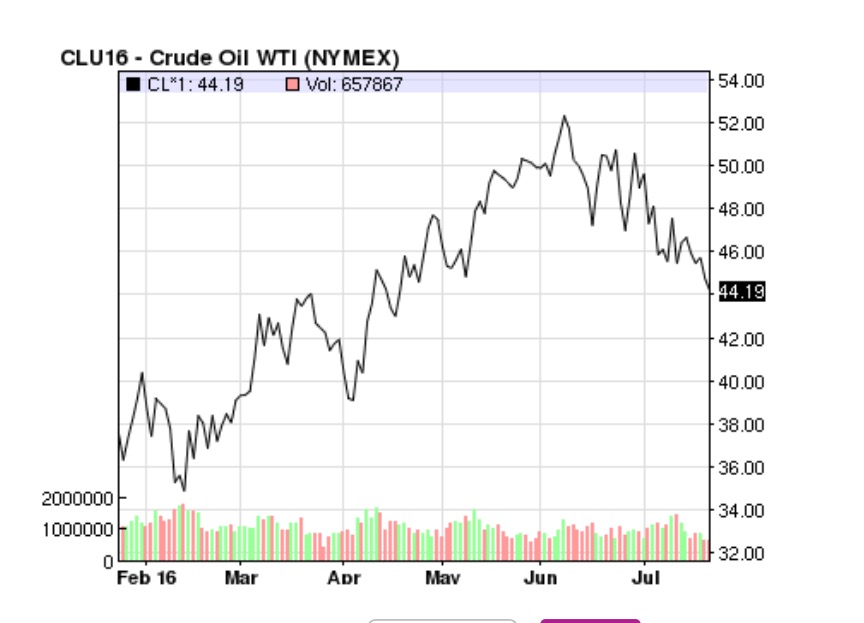
2. Foreign funds selling on 1MDB probe

3. Ringgit fell 4.4% from 3.89 to 4.06 yesterday.

4. Tong's value investing portfolio bought export counters Focus Lumber, Pohuat and Classic Scenic.

5. Time to buy export counters?
巴菲特等CEO建议 上市公司不宜发布盈余预测
Author: Tan KW | Publish date: Fri, 22 Jul 2016, 02:47 PM

“股神”巴菲特。(网络图)
这套原则是过去一年来摩根大通执行长戴蒙(Jamie Dimon)与一群企业执行长经由面谈、视讯会议、电邮往返研商后的成果。
参与者除了波克夏董事长巴菲特外,还包括全球最大基金经理公司贝莱德(BlackRock)的董事长芬克、先锋集团(Vanguard)麦克纳布三世等人。
戴蒙和巴菲特等商界领袖在会谈中讨论到上市公司面临的窘境:股东与管理阶层之间缺乏互信与联系、所谓公司治理专家为上市公司订定太多规则,以及五花八门的会计指导原则。
因此之故,许多投资资金流向未上市公司,催生了更多不受公众监督、资讯不透明的公司。
经过一年讨论,这群执行长建议一套全体都同意的公司治理“原则”,涉及的主题包括给执行长和董事的薪酬(提高股票占薪酬比率、减少现金比重)。
这群执行长也将发布一份报告,其中包含一些看来似乎很普通的建议,例如上市公司的董事会成员应该多元等。
其他建议则可能令人讶异,例如其中一项建议就似乎认为,许多上市公司不该提供盈余预测前瞻指引。
此外,他们也反对上市公司采用会计手法,把股票酬劳从“非一般公认会计原则盈余”(non-GAAP earnings)中剔除。他们坚称,股票酬劳“显然是经营成本当中的一项”。
整体而言,这群执行长不赞成双层股权结构的投票权架构。这种架构让持有优先股的特权股东享有凌驾于普通股投资人的发言权(目前采用这种股权结构的公司包括脸书、纽约时报等)。
他们建议,公司若采行双层股权表决方式,应考虑订定“落日条款”,依据特定的时间或触发事件予以废止。
他们也建议,上市公司的董事会应该能在执行长不在场的场合中,接见任何员工,以了解他们对公司经营方式发自内心的看法。
此外,若一家公司的董事长和执行长并非由不同的人担任,以便互相监督,就该选择一位强势的董事来扮演监督制衡的角色。
http://www.enanyang.my/news/20160722/%E5%B7%B4%E8%8F%B2%E7%89%B9%E7%AD%89ceo%E5%BB%BA%E8%AE%AEbr-%E4%B8%8A%E5%B8%82%E5%85%AC%E5%8F%B8%E4%B8%8D%E5%AE%9C%E5%8F%91%E5%B8%83%E7%9B%88%E4%BD%99%E9%A2%84%E6%B5%8B/
订阅:
博文 (Atom)