2021年4月7日星期三

Kumpulan Powernet to buy 51% stake in transportation firm, hopes to help fight Covid-19


Kumpulan Powernet to buy 51% stake in transportation firm, hopes to help fight Covid-19

KUALA LUMPUR (Oct 21): Kumpulan Powernet Bhd is seeking to venture into the logistics business by acquiring a 51% stake in chemical and gas transportation firm Chemtrax Sdn Bhd for RM10 million.

Chemtrax, headquartered in Pasir Gudang, Johor, is principally involved in the provision of chemical and gas transportation and forwarding services. The firm has logistics facilities with depots and yards in Pasir Gudang and Simpang Renggam, Johor and Kuantan, Pahang.

Kumpulan Powernet said it has signed an agreement to buy the stake from Sabaka Group Sdn Bhd, which currently wholly owns Chemtrax.

The group said it could immediately leverage on the long-term established experience of Chemtrax and its existing platforms across chemical and gas transportation businesses for the multinational companies.

"As Chemtrax is heavily involved in the transportation of amongst others, synthetic latex and nitrile butadiene rubber, which are key materials for latex gloves, the company expects that Chemtrax would be able to benefit from the current surge of demand of latex gloves across the world arising from the Covid-19 pandemic," the group said in a bourse filing.

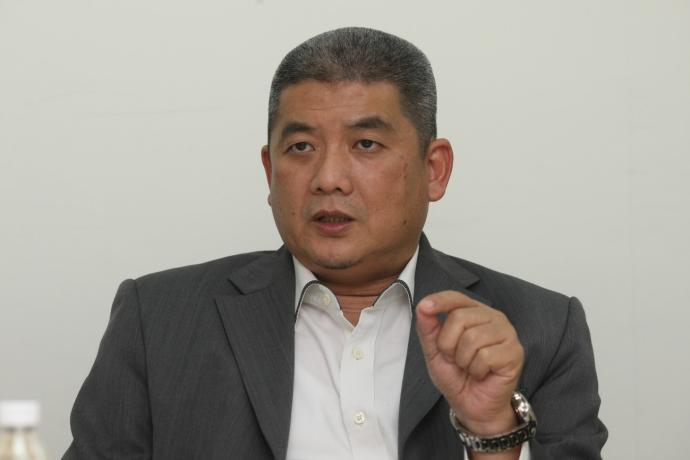
In a separate press statement, Kumpulan Powernet group managing director Mustakim Mat Nun said the proposed acquisition is consistent with the group's intention to explore the logistics segment upon the emergence of a new shareholder a year ago.

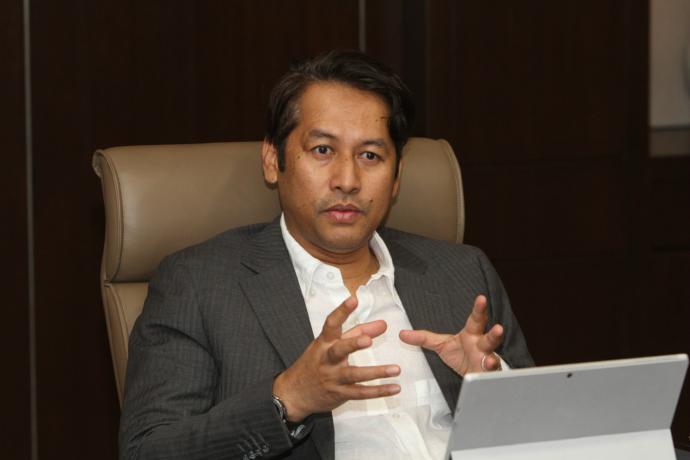
The founder and group chief executive officer of Serba Dinamik Holdings Bhd, Datuk Dr Mohd Abdul Karim Abdullah, in his personal capacity bought a 20.04% stake in Kumpulan Powernet last year.

"We are also happy that we are able to somewhat contribute to the fight and containment of the Covid-19 pandemic via our acquisition of Chemtrax. The increase in demand for nitrile gloves has also resulted in a spike in demand for the specialised services of Chemtrax," Mustakim said.

The audited earnings before interest, taxes, depreciation and amortisation (EBITDA) of Chemtrax as at the financial year ended Dec 31, 2019 (FY19) stood at approximately RM5.8 million.

Mustakim said Sabaka has guaranteed the aggregate EBITDA of Chemtrax in FY20 and FY21, based on business forecasts, will not be less than RM5 million for each year.

Based on the 51% stake to be acquired, the contribution to Kumpulan Powernet will be RM2.55 million for FY20 and FY21, based on the EBITDA guarantee, he said.

"With the EBITDA guarantee as provided under the terms of the proposed acquisition, we expect the proposed acquisition would immediately yield accretive and provide long-term sustainability to the company's revenue and profitability," added Mustakim.

At market close today, shares in Kumpulan Powernet were up 18 sen or 5.45% at RM3.48 with a market capitalisation of RM393.53 million.

Construction of rubber glove hub to start in June


TheStar Tue, Apr 06, 2021 12:08pm - 1 day ago


KUANTAN: The construction of the rubber gloves and personal protective equipment (PPE) hub by the World Gloves International Group City and Hub Development Sdn Bhd (WGC) is set to begin this June.

To be located in the Gebeng industrial area, the hub will be constructed on a piece of land spanning 128.2 hectares, involving an investment of RM100 million, said Pahang State Development Corporation (PKNP) chief executive officer (CEO) Mohd Faizal Jaafar.

"The construction of the first phase is scheduled for completion in December this year.

"This latest investment in this industrial area will definitely bring economic benefits to the locals and the surrounding areas,” he said in a speech at the signing ceremony of the land lease agreement between PKNP and WGC held here last night.

The agreement was signed by Mohd Faizal on behalf of the PKNP, while WGC was represented by its CEO Datuk Gianluca Ernesti, witnessed by Pahang Menteri Besar Datuk Seri Wan Rosdy Wan Ismail and State Secretary Datuk Seri Dr Sallehuddin Ishak.

WGC is also working with the Ministry of International Trade and Industry’s (MITI) agency, the Malaysian Institute of Automotive, Robotics and Internet of Things (IoT) (MARii), which acts as the technology partner for the project.

The rubber gloves and PPE products are targeted for the markets in Europe, the United States and Southeast Asia.

Mohd Faizal said PKNP is committed to bringing more investments to Pahang -- a state which had been highly dependent on the agriculture and plantation industry -- in order to enable it to grow into one of the developed states through increased investments and the use of technology.

"Since 1995, PKNP has served as a one-stop agency to facilitate investors in building factories in industrial areas in the state, not only in Kuantan, but also in other districts such as Rompin and Maran.

"This would not only benefit the people in Pahang but also boost the state government's revenue, such as through tax collection," he said.

Mohd Faizal said as of December 2020, 657 projects worth RM62.73 billion had been approved in Pahang, of which RM50.40 billion involved foreign investors.

He also noted that last year, MITI had approved 30 projects in Pahang, involving investments totalling RM4.78 billion, which created about 2,600 jobs. - Bernama

8 WAYS CERAMIC IS USED IN MODERN, DAY-TO-DAY LIFE


14th April 2015

Do you think you come into contact with ceramic in your day-to-day life? We’ve put together a list of 8 ways ceramic is used in modern life, the obvious and the not so obvious.

Take a read and you might just be surprised!

THE OBVIOUS

1. Tiles


Our roofs, bathrooms and kitchens are covered in ceramic tiles. Ceramic can be glazed with different colours and printed with any design, so tiles can be tailored to different people’s tastes. They are tough and easy to wipe clean once glazed which is perfect for use in the kitchen or bathroom!

2. Cookware
Majority of crockery and pots are made from ceramic. From unglazed to glazed, mortar and pestles to the mug that holds your tea, ceramic is a staple material in the kitchen. Ceramic knives have also become common, they are one of the hardest knives you can buy yet are extremely lightweight!

3. Brick

Industrial ceramics
Our homes are made from brick and are held together by cement, both of which are types of ceramic. Without ceramic, what would we use instead to create the four walls of our homes?

4. Toilets

Ceramic Lightning
Sanitary ware such as toilets, sinks and bath tubs are made from ceramic. Ceramic can be glazed and fired so that it becomes non-porous, perfect for sanitary ware which gets used every day and is, of course, in contact with lots of water!


THE NOT-SO OBVIOUS

5. Space

NASA’s Space Shuttle had thousands of heat-resistant tiles protecting its exterior from overheating due to friction generated by Earth’s atmosphere. Future reusable space planes are expected to use a new, slimline ceramic material that will enable it to be both more aerodynamic and withstand temperatures up to 2400°C. Composite ceramics are also used to create the nose cones of spacecraft!

6. Cars
Ceramic can help to decrease pollution and capture toxic materials. Today’s catalytic converters are made with ceramic and help convert harmful fumes into non-toxic gases, therefore having a huge benefit on the environment. Ceramic components can be found in almost every aspect of a vehicle and are a major contributor to advances in hybrid and eco-friendly vehicles.

7. Artificial Bones and Teeth
Toughened ceramic is used in hip replacements and is designed to be porous so that it can stimulate natural bone growth around the artificial joint. You will also find ceramic fillings for your teeth where the ceramic is chemically bonded to your tooth making it extremely strong.

8. Electronic Devices

Industrial ceramics
Televisions contain ceramic insulators, computers have silicon chips and the electric motors in your vacuum cleaner or blender are also made using ceramic!


Who would have thought that we would come across so much ceramic in modern life! Some people say that ceramic is an outdated material and it is often described as ‘old fashioned’. In reality, ceramic is the key to many of our new technologies and is used day to day by us all.

With ceramic, we have the capability to do things that we may only have dreamed of once. So next time you’re wondering what material would be good for your product, why not think ceramic?


USING CERAMIC AS LUXURY PACKAGING IN THE SPIRITS AND DRINKS INDUSTRIES

4th May 2015

Ceramic Gifts

Have you ever thought about using ceramic for spirit and beer bottles? I would think a lot of people would answer with no.
BUT… ceramic is such an obvious choice to use as packaging in the drinks industry and many brands, such as Chivas and Diageo, have realised the potential of using ceramic for their products due to many amazing benefits.

Here are a few reasons why ceramic is such a great choice for luxury packaging for spirits or beer:

GLAZED
Ceramic can be glazed rendering it non porous, it has this in common with glass. Once fired, the whole of the decanter, inside and outside, is completely sealed so that no contamination will occur and the spirit is kept just as fresh as it would be in a similar glass bottle.

BOTTLE SHAPE
Ceramic moulds can be designed in nearly any shape or form, meaning bottle shape possibilities are endless. Here at Wade we have created a wide range of different decanter shapes for numerous spirits industries. Some examples include a hula girl, a monkey and a rugby ball. The options for creating pretty much any shape you like is a huge advantage in the packaging, or container, market.

BOTTLE SIZE
Do you want the option to have a decanter produced as big or as small as you like? With ceramic, we have the capability to create different moulds to produce different sized decanters. At Wade, we have produced decanters from as small as a 50ml Chivas bottle to a giant 40 litre Usquaebach whisky flagon.

BOTTLE DESIGN
Ceramic can be sprayed with a huge variety of coloured glazes. A piece can either be one single colour or can be hand painted with many different colours, designs and patterns. One huge benefit with ceramic is the ability to apply lithographic print. Almost any artwork can be turned into litho print and carefully applied, by skilled hands, to the ceramic bottles. There are some amazing capabilities and some examples of exceptional design that we have been able to implement on pieces of ceramic and on ceramic decanters.

BESPOKE AND PERSONAL
Using all of the above, ceramic gives us the opportunity to design, create and produce exceptional pieces that can promote and showcase your brand. Quality ceramic bottles can be personalised to help promote a product. One area we have found to be extremely popular is producing limited edition versions of a product in a distinct, ceramic decanter. Having a material that defies the norm can really help you to stand out from the crowd. Ceramic can deliver that feel of quality which is important to so many, especially with collectable, limited edition items.

So, next time you need packaging for your spirit or drink product, think ceramic!


WHY BEING ‘MADE IN BRITAIN’ IS SO IMPORTANT

25th May 2015

Quote2

The people of Britain are increasingly favouring products which are marked as ‘Made in the UK’ or ‘Made in Britain’. At Wade, we are proud to produce our products right here in Britain, in our factory in Stoke-on-Trent. We think this is such an important thing and provides huge benefits to the UK.

More products being produced in Britain of course means manufacturing is on the rise! There was a huge drop in manufacturing due to the purchase of products overseas but this has recently changed. It is such a positive thing for the UK and its residents for the following reasons:

MORE JOBS
More manufacturing in the UK means more jobs are available for UK residents. Instead of cutting jobs due to outsourcing our produce, we are now investing in our own country which results in a better standard of living for those working and residing in Britain.

INCREASED SKILL SET
Having more people working and manufacturing in the UK allows its residents to produce a wider range of skills and abilities. We are allowing those from the UK to expand their knowledge and work on a trade by training them effectively and investing our time to develop their skill set. The alternative is to simply import goods and produce from overseas which may leave these people jobless which is not good for our economy or society.

QUALITY PRODUCT
When products are made in the UK, it is much easier for us to be able to check their quality. It is easier to make amends to the manufacturing process or the materials used since it is being produced inland. Changes can be made to ensure the quality of the product is up to the highest standards.

FAIR WORKING STANDARDS
In the UK we have laws and legislations in place to ensure workers are treated fairly and are paid a certain amount of money for the work that they are doing. This cannot be guaranteed overseas but it is such an important thing. By manufacturing products in the UK, we can ensure they have been produced in fair working conditions and without the mistreatment of workers.

NO NEED FOR HIGH COSTS
If we manufacture in the UK rather than importing overseas, we save a huge amount of money on transportation. Less people are involved in the process of getting the product from A to B which can also help to decrease costs.

AN ADDED GREEN BONUS
For British people purchasing the products which have been ‘Made in Britain’, produce is travelling much smaller distances which also helps to reduce our carbon footprint!


CERAMIC: HOW IT’S MADE (INFOGRAPHIC)

10th June 2015

Here’s our infographic helping you to understand how some of our products are made!

Ceramic vase


Why not take a look at our Video Tour to see Bench Casting in action (skip to 00:42)!

https://www.youtube.com/watch?v=rZk-KBiScaM


WADE WORKS WITH PADDINGTON BEAR

17th June 2015

To promote the release of the Paddington Bear movie at the end of November, London hosted The Paddington Trail. More than 50 Paddington Bear statues were dotted around London close to museums, parks, shops and key landmarks. Each bear was lovingly created by an artist, designer or celebrity.

We were approached at the end of 2014 with a fantastic opportunity to work alongside Selfridges and Studio Canal for the new Paddington Bear movie. We were asked if we could create miniature ceramic figures to replicate some of the celebrities Trail Bear designs.

The Miniature Trail Bears, which we produced here in our factory in Stoke-on-Trent, were sold in Selfridges in London and a portion of the proceeds were donated to the NSPCC!
In total we produced around 2000 figures which were sold in their own suitcase-shaped box with a certificate of authenticity.

The full sized Paddington Trail bears were also auctioned off to raise money for charity. It was a huge success with around £950,000 being donated to the NSPCC (National Society for the Prevention of Cruelty to Children), ChildLine and Action Medical Research!

We produced the designs shown below:

All Bears

We’re extremely proud to have been involved with such a fantastic project and are honoured to have been able to help raise money for the NSPCC! Having our produce sold in Selfridges in London was a real privilege and we know these pieces will become valuable British treasures to people and their families for many years to come.

We’d love to know if you managed to get your paws on one of these Limited Edition figures, or maybe even the whole set? Let us know by sending us a picture on any of our social channels.

If you missed out on the chance of purchasing a ceramic Miniature Trail Bear then don’t worry! The classic Paddington is still available to buy from the Paddington Bear Shop located at Paddington Station in London.


CERAMIC MANUFACTURING: REDUCE, RE-USE, RECYCLE

6th July 2015

Wade Ceramics Limited takes its environmental responsibilities seriously. The industry is unavoidably a heavy energy user ceramics manufacturing process, therefore we strive to be as efficient as possible.

We utilise the waste heat from the exhaust stacks on the kilns to dry product, to heat the factory and to warm product for certain production areas. This means we don’t need extra space allocated to heating within the factory.

Wade recycles most of its water waste through an effluent treatment plant which removes only the sludge left by tanker from site. The reused water is then used to clean down machinery on a daily basis.

All excess clay is recycled either by Wade through our own system, or by returning it to our supplier to be recycled back to us in a usable state.

Any fired product, biscuit or glazed, which is broken or otherwise rejected is taken by a local tile manufacturer and ground down to dust. This is then mixed with virgin materials and used to manufacture tiles.

Our raw, manufacturing materials are supplied in reusable packaging that when empty is returned to the supplier for re-use. Our finished product is packaged in minimum unprinted, recycled card for protection or, more usually, bulk packed on pallets for ease of handling.


STEM EVENT: WADE GET NCHS – THE SCIENCE COLLEGE INTERESTED IN CERAMIC ENGINEERING

16th July 2015

On the 13th and 14th July, Wade helped out at a 2 day STEM event designed to get current year 10 students (15 years old) interested in industrial/manufacturing engineering.

DAY 1

Wade Engineers attended the first session at NCHS – The Science College, in Staffordshire, on Monday morning. The day started with an introduction and students were set the task of doing research relating to ceramics and mechanical engineering.

Once they had completed this activity they moved on to assembling some AODD pumps, the same as those we use in our factory. The students learned how to read technical drawings, the importance of housekeeping and also planned the best way to work as a team.

With the help of Wade’s apprentices, all the teams successfully re-built the pumps. We were surprised at how quickly the teams were working, so they were set another challenge: the first team to successfully strip down and rebuild the pump wins a prize! The students rose to this challenge and soon there was shouting, sweating, ‘borrowing’ tools from other teams and even standing on tables to work faster! It was great to see the students so enthusiastic, especially to the teachers who commented on how different some of the students were behaving compared to normal.

By the end of the day all the teams had completed the challenge, with the winning team being awarded sweets and fizzy pop (normally banned from school, so it was very well received!). After a good tidy up the day was over, ready for testing in the morning.

DAY 2

On Tuesday morning 22 students and 2 teachers came to our factory to see our process and also to test their completed pumps. The students thought our factory was amazing and really enjoyed seeing all the different parts of our process, from pressure casting to lithographing. After the tour, they tested the pumps on a purpose built test rig in the workshop. Two teams found that their pump worked first time, and worked very well, whilst two teams had to dismantle their pumps and fault find. Eventually all the teams had their pumps working, and a prize was awarded to the team with the best performing pump.

After lunch, we had a discussion about modern apprentices and careers in engineering. A large number of students expressed an interest in working for Wade Ceramics, with some asking if they could stay longer or come back!

It was a pleasure to have the students working with us for these 2 days and everybody enjoyed themselves and learned something new. Hopefully we will see some of them again in the future, whether on work experience or as a potential future employee!


Ripe opportunities in the space tech industry

y

When we think of space exploration in this day and age, Elon Musk and SpaceX immediately come to mind, their being synonymous with the industry. Over the past few years, we have heard conversations on not just finding life on Mars, but the possibility of having a multi-billion dollar space tourism industry.

Malaysia too is keen to get into this game. Datuk Dr Ir Mohd Abdul Karim Abdullah, group managing director and CEO of Serba Dinamik Holdings Bhd, shares that the company is forging the way in space tech in Malaysia.

Space tech may seem irrelevant to the common man, but in reality, it is powering a lot of earthly technologies today. Mohd Karim shares that Serba Dinamik is looking at connecting the dots within the information and communications technology (ICT) aspects of its core capabilities, such as its communication components. By providing ICT through internet connectivity using satellite technology, it is able to look into the underserved and unserved areas domestically. “Internet 4.0 is a revolution that provides internet access in the rural, most unserved areas. It is a pity that half the population of the world is unconnected.”

ICT is required to support the group’s various initiatives in frontier technologies that require broadband and internet connectivity. By providing the facilities and infrastructure, Mohd Karim says ICT opens up much bigger markets for other related industries under Industrial Revolution 4.0 (IR4.0).

We believe that space economy will strengthen the growth of our ICT segment and provide another source of income to the group
- Datuk Dr Ir Mohd Abdul Karim Abdullah
Group Managing Director and CEO of Serba Dinamik Holdings Bhd

“ICT also contributes in terms of nation-building — it is the intention of the government of the day to provide connectivity to the underserved and unserved communities. Malaysia Space Agency’s (MYSA) role is to give the advisory and technical support to assist Serba Dinamik to realise its objective in making a footprint in the space economy,” he says.

“Swissto12, a private expert based in Switzerland, has the technology to manufacture components that are used in satellites via 3D printing technology. We have partnered with them and through this collaboration, Serba Dinamik will enhance its capability in high-value engineering needed to support the space economy.”

According to Mohd Karim, Serba Dinamik believes that the space industry is another area on which the company can leverage its core competencies in operations and maintenance (O&M), engineering procurement construction and commissioning (EPCC), ICT as well as education and training.

Touching on artificial intelligence, Mohd Karim says space is an indispensable factor to catalyse its growth. Another example is the advances in earth-imaging data, which will increasingly provide vital insights to help in the calculation of macroeconomic activity, accurately measuring migrant flows and the impact of climate change, to name a few.

Space tech will also impact fintech, says Mohd Karim, as it will enhance secure global transactions across continents via decentralised platforms, such as blockchain. “We believe that space economy will strengthen the growth of our ICT segment and provide another source of income to the group.”

Withot a doubt, this comes with some challenges. Among others, Mohd Karim says the challenges will be on the readiness of our local financial institutions to come in and support space technology projects. Once the ecosystem of supply chain in this industry is created, our financial institutions need to support its financial requirement.

Another challenge, he adds, is for the government to swiftly develop the regulatory framework for the space industry to support this important agenda and the future of this country.

“Today, we see the world moving rapidly into digitisation with new innovations and technologies driving the economies. Serba Dinamik has been leading and leveraging this transformation to capitalise on the new businesses and new markets to stay relevant and sustainable.”

The group’s latest initiative in space technology is called New Space Economy Nexus (NSEN). Its objective, says Mohd Karim, is to capitalise on and build Serba Dinamik’s capabilities in terms of skilled or professional manpower, knowledge and technology transfer on equipment, opening new businesses along the value chain and building the ecosystem in Malaysia.

“Space economy comprises a full range of activities and uses resources that create value and benefits to human beings in the course of exploring, researching, understanding, managing and utilising space. It has distinguished features such as cutting-edge technologies and longer terms for both project development and return on investments,” says Mohd Karim.

“In the past, it was a government-dominated sector, as access to space is costly, involves technical risks and viability of space-enabled services requires large resources. That was true for the old space economy, characterised by big government programmes, a few big contractors, little competition, no growth and being usually defence-oriented.

“In contrast, the new space economy will have a mix of government and commercial programmes, a diversity of contractors and vigorous competition for exponential growth.”

Research and development initiatives by private entities boost the economic capacity and viability of the space economy.

Malaysia has yet to participate in this new space economy, says Mohd Karim, even though we have the capacity and capabilities to do so. MYSA has taken initiatives, via the Ministry of Science, Technology and Innovation (MOSTI) to introduce the Malaysian Space Board Bill 2020, which was tabled for its first reading last year. The bill is to regulate matters pertaining to the space industry.

“Serba Dinamik fully supports the initiatives that will promote more public-private partnership among industry players,” he says.

The space industry is not only about sending astronauts to space, or merely launching satellites for various missions. According to Morgan Stanley’s interpretation of New Space Economy, there are 10 main pillars that will propel the industry to reach US$1 trillion by 2040:

  1.   Satellite launch: One of the largest sub-sectors, mainly focused on small launchers for commercial purposes.
  2.   Manufacturing: Another large subsegment in the space economy, with companies focused on design and development of spacecraft, hardware, propulsion systems, engines and other technologies.
  3.   Satellite internet: Focus on connectivity through low-earth orbit (LEO) satellites and mega constellations.
  4.  Deep space exploration: Entities developing high-level missions for humans and cargo beyond the earth’s atmosphere such as to the moon, Mars and beyond.
  5.   Lunar landing: Focused mission with the objective of accumulating experience living and working far from earth, by building products and infrastructure for moon missions.
  6.   Earth observation: Companies focus on imaging, tracking and analytics technology to monitor weather, climate, maritime and GPS data.
  7.  Asteroid mining: These disruptors are developing technology to extract water, rare minerals and metals from near-earth asteroids.
  8.  Space debris: Track and analyse human-made objects orbiting in the atmosphere. Debris needs to be monitored or could collide with satellites and spacecraft, or fall to earth.
  9.   Space tourism: Developing access to space for private citizens, space explorers, space adventure programmes and others.
  10.  Space research: Dedicated to research, exploration and education about space and technology.
新策略大股东牵线 ES陶瓷携手阿都卡林有谱?


【独家】

独家报道:谢静雯

(吉隆坡29日讯)ES陶瓷(ESCERAM,0100,创业板)年初迎来两位土著大股东,都和商界红人拿督莫哈末阿都卡林关系密切,未来不排除 “牵线”,与后者庞大商业帝国共创新商机。

今年1月, Vintage资本的罗斯里哈马特收购ES陶瓷5.33%股权,崛为大股东;在市场仍在揣测新股东的影响时,公司3月初再宣布,罗斯兰奥斯曼加入,持股5.049%。

若是紧密关注世霸动力(SERBADK,5279,主板能源股)董事经理兼总执行长阿都卡林过去几年来的动向,可能对ES陶瓷这两位新股东毫不陌生。

均曾任职世霸动力

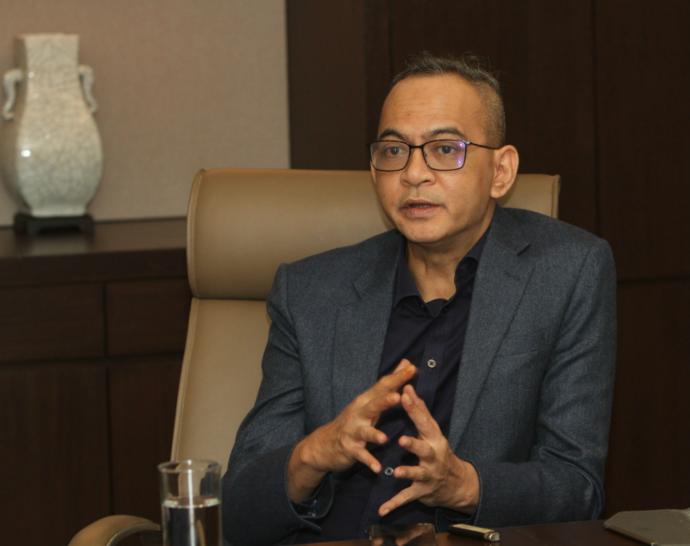
罗斯里接受《南洋商报》专访时说:“是的,我们都曾在世霸动力。我曾是投资部副总裁,罗斯兰是集团高级副总裁。离职后,我成立了Vintage资本。”

虽然罗斯兰是通过Vintage资本加入ES陶瓷,但他其实也是砂综合工业(SCIB,9237,主板工业股)现任集团董事经理兼总执行长,阿都卡林为非独立非执行主席。

阿都卡林是在2019年8月收购砂综合工业,同年10月再收购威立集团(KPOWER,7130,主板消费股),频频出手让他成为商界红人,动向备受市场关注。

朝工业4.0转型

谈及入股ES陶瓷的初衷,企业生涯始于玲珑集团(Renong)的罗斯里透露,这得追溯到1998年,当时他是财长机构(MOF Inc)旗下国民企业有限公司(PNS)一员,这个组织的宗旨是提高土着企业家参与上市公司中。

“所以,当我离开世霸动力后,我找来了当初的伙伴们,成立了新的私募基金公司Vintage资本,继续响应政府提高土著创业家的目标,投资到适合的企业上。”

罗斯里目前直接持股ES陶瓷6.47%,而罗斯兰直接持股4.51%,两人皆同时通过Vintage资本间接持股1.79%。

他形容遇见ES陶瓷如同“命运般的存在”,在政府鼓励企业界朝工业4.0转型,并频频针对制造业和科技业提供各种奖掖,ES陶瓷的特质正好是最佳的平台。

续由专业团队管理

“ES陶瓷拥有非常稳固的基本面,管理团队经验丰富,以核心的技术来制造专业的陶瓷模具,拥有高技术和高质量的产品,还有良好的商业模式,从原料供应到销售环节皆表现出色。”

陈家继续留守

另外, ES陶瓷去年底公告,持股逾20%的卡马尔·陈股权转移,儿子陈善光浮上台面,接手10.2%,成为大股东,其他股权分发给其他家人。

近10年没有接受过媒体专访的卡马尔·陈,不久前接受《南洋商报》专访时表示,只是将股权分配给家人,但陈家继续留守ES陶瓷,并让专业队伍继续管理。

研发新产品

ES陶瓷目前主要业务是生产手套摸具,而罗斯里和罗斯兰二人不仅看中当前大势个人防护设备(PPE)市场,拥有稳健且极强获利能力极强,还有陶瓷未来的发展潜力。

罗斯里说:“ES陶瓷现虽专注在手套市场,但接下来会与一些研究中心和机构在技术层面携手合作,发展多1至2个新产品。毕竟陶瓷的用途相当广泛,包括再生能源、建筑等。”

作为砂综合工业掌舵手的罗斯兰则透露,当初阿都卡林大肆收购多家公司,就是想要多元化事业版图,开发更多新产品。

或与砂综合工业合作

在他们研究了那么多家上市公司后,他形容ES陶瓷的商业模式和前景“干净且明确“,有机会能与砂综合工业进一步合作。

“我们内部有在讨论,需要科技和技术来发展新的产品和项目,未来不排除会让两者合作,借用双方的技术来达到协同效应。“