2025年9月13日星期六

find phone


How to Unlock an Android Phone Without Password, PIN, or Pattern


Introduction

Android users often get locked out of their phones. You may have lost your password or PIN, bought a used device without login information, or had a malfunctioning screen that prevents pattern entry. Android’s security system protects your personal info, which is good yet stressful when you can’t get in. 

The process can be intimidating with so many lock options—PIN, password, fingerprint, pattern, and Google FRP. Thankfully, dependable Android unlocker tools and approved ways allow recovery. This tutorial offers simple, reliable device recovery methods.

Understanding Android Lock Types

Before looking into unlock solutions, learn about Android device locks. Screen locks are most common along with PINs, alphanumeric passwords, and swipe patterns. Smartphones today employ fingerprint and face recognition. These security features restrict phone access to authorized users.

Factory Reset Protection (FRP Lock) is another protection. FRP starts automatically after a factory reset, introduced by Google. In this case, the device requires you to check in with the synced Google account. This prevents illicit use of stolen phones, but also irritates genuine users who forget their account data, especially second-hand buyers. The correct method or program is needed for FRP bypass

Method 1: Use Wondershare Dr.Fone – Screen Unlock (Recommended)

This only works on devices you own or have written authority to unlock. Wondershare Dr.Fone – Screen Unlock (Android) is an excellent tool for unlocking Android phones. For compatible devices, it can remove screen locks and facilitate FRP (Google account) recovery. The interface is very easy to use; thus, no technological knowledge is needed.

All in all, Dr.Fone – Screen Unlock (Android) is a single powerful tool that can help you get rid of any type of Android lock screen in a very short time, say a PIN, password, pattern, fingerprint, or Google FRP, as well. It is compatible with 27+ brands and 2,000+ devices, such as the latest Samsung S25 series, and thus, it guarantees easy unlocking that is safe and without any inconvenience, and you do not need to be a technician to do it.

Key features

  • A device’s PIN, password, pattern, fingerprint, and face lock will be removed.
  • Compatible with Google account verification via FRP on supported devices (mainly Samsung).
  • Supports the devices of Samsung, Xiaomi, Huawei, OPPO, Vivo, etc.

Step 1. Install Dr.Fone on your computer. Launch the suite and click “Screen Unlock.” 

Step 2. USB-connect the locked Android device. Select “Android” in Dr.Fone and select “Unlock Android Screen” as needed. The program tells you which mode to utilize (Download Mode or Recovery Mode) and reveals your model’s button sequence.

Step 3. Select your device brand/model on Dr.Fone to load the right package and instructions. First, remove screen locks; then verify ownership and proceed with FRP. 

Note. Dr.Fone provides a “without data loss” option on several Samsung/LG models. Unlocking may destroy data on many devices.

Step 4. Let Dr.Fone finish and reset the phone. Set a new screen lock, sign in, and restore from backup if data was deleted. Do not forget your Google/Samsung credentials to avoid FRP prompts.

Pros

  • Simple, guided workflow; no expertise needed.
  • Many kinds and brands/models supported.
  • Helpful FRP pathways for supported devices.
  • Not all Samsung/LG models can be unlocked without data loss.

Cons

  • Data wipe may be needed on several models; outcomes vary by Android version.
  • The trial requires a computer; full functionality is paid after the trial.

Method 2: Using Google Find My Device

Use Google Find My Device to unlock a Google-linked phone. Remotely unlocking or deleting your phone requires an internet connection and a Google account. Let’s see how to unlock with Find My Device:

Step 1. Go to “Google Find My Device” on your phone or computer.

Step 2. Use the locked phone’s Google account to “sign in.”

Step 3. Choose your locked smartphone from the list.

Step 4. Click the “Lock” option.

Step 5. Set a temporary password and press “Lock” again.


Step 6. Your screen lock will be replaced with the new password. Use this temporary password to unlock your phone.

Limitations: This method requires an internet-connected phone and Google account sync.

Method 3: Samsung Find My Mobile (Samsung Users Only)

Samsung offers an approved technique to unlock your phone without losing data. Most Samsung phones have Find My Mobile (now SmartThings Find), which can locate, lock, and unlock them remotely. Easy and safe, but requires a Samsung account and Remote Unlock.

What you’ll need before starting:

  • Your Samsung must be on.
  • It needs Wi-Fi or mobile data.
  • Link your Samsung account to the device.

Step 1. Visit  https://findmymobile.samsung.com/login” on your phone or computer.

Step 2. Click “sign in” and input your Samsung credentials.

Step 3. Select the locked device from registered devices.

Step 4. Click “Unlock” and enter your Samsung account password.

Step 5. Remotely unlock the phone in seconds.

Pros: Fast, official, and secure.

Cons: Samsung account required.

Method 4: Factory Reset (Last Resort)

Android device lockouts usually require a Recovery Mode factory reset when all else fails. Without a password, this method erases all user data and restores the device to factory defaults. Follow these Recovery Mode reset steps:

Step 1. First, power down your smartphone.

Step 2. Press and hold the proper button combination until Recovery Mode appears.

Step 3. Press volume buttons to select “Wipe data/factory reset.”

Step 4. Press “Power” and select “Yes.”

Step 5. Click “Reboot system now” after resetting.

Pros: Free and effective for users.

Cons: Deletes all data and may lock the Google account.

Preventing Future Lockouts

You can avoid another frustrating lockout with preventive measures. 

  1. Safeguard your Google account and password for emergency access to your smartphone. 
  2. Fast, secure access with fingerprint or face unlock. 
  3. Use a secure password organizer to remember logins. 
  4. Lastly, regularly back up your files. This protects and recovers personal files and settings following phone resets.

Conclusion

Losing access to your Android device is upsetting, but you can recover. If required, Google account recovery, advanced tools, and factory reset can help. Secure passwords, activate biometrics, and save backups to avoid issues. Expert unlocking tools like Dr.Fone Screen Unlock can help, if needed. Prepare and take the proper procedures to always control your device.


This Post was Last Updated On: September 10, 2025

2025年8月25日星期一

RYL autopicker


RYL Auto Picker

RYL Auto Picker Tool Interface

How to Use the RYL Auto Picker in Risk Your Life

In the online game Risk Your Life (RYL), managing and collecting dropped items from defeated monsters can be challenging, especially when there's a lot of action happening on the screen. The RYL Auto Picker is a handy tool that automates this process, making it easier for players to gather items without needing to manually pick them up.

Below, we’ll walk you through how to use the RYL Auto Picker to enhance your gameplay.

What is the RYL Auto Picker?

The RYL Auto Picker is a simple yet powerful tool that helps players automatically collect dropped items from monsters in Risk Your Life. It’s especially useful in fast-paced gameplay where items may get scattered across the map, and you don't want to miss any valuable loot.

How to Use the RYL Auto Picker

Using the RYL Auto Picker is easy! Just follow these simple steps:

  1. Double-click the RYL Auto Picker file
    Locate the RYL Auto Picker file you’ve downloaded and double-click it to run the tool.
  2. Press "Home" on your keyboard
    Press the Home key to activate the tool. This will start the item collection process.
  3. Press "End" to stop the Auto Picker
    To stop the tool from collecting items, simply press the End key. You can toggle the tool on and off whenever you like.
  4. Enjoy!
    Once activated, the Auto Picker will automatically collect items dropped by monsters in the game. Now you can focus more on combat and strategy while the tool takes care of the looting.

Where to Download the RYL Auto Picker

Final Thoughts

The RYL Auto Picker is a must-have tool for any Risk Your Life player who wants to streamline the process of looting. By automating item collection, it saves you time and effort, allowing you to focus more on other aspects of the game. Whether you’re farming for rare items or just trying to clear a monster-filled area, this tool will make your gameplay much smoother.

2025年8月22日星期五

26個 Chat GPT 指令元則


26個 Chat GPT 指令元則,Prompts 增加效率、節省時間

以下內容也剛好可以整理 2023 一整年 ChatGPT 使用技巧,包含可以省略哪些部分、提升 Prompts 效率的指令。

以下是針對論文內的大項目做得繁體翻譯:

26 個 Prompts 指令技巧

1. 與大型語言模型(Large Language Model, LLM)交流時無需客氣,故無需使用諸如「請」、「如果你不介意」、「謝謝」、「我想要」等語句,直接切入正題。

2. 在提示中納入目標受眾,例如,受眾是該領域的專家。

3. 將複雜任務分解為一系列較簡單的提示,以進行互動式對話。

4. 使用肯定的指令詞,如「做」,避免使用負面語言,如「不要」。

5. 當需要釐清或深入了解某個主題、觀念或任何信息時,使用以下提示:

   – 簡單解釋[具體主題]。

   – 像對11歲的孩子解釋給我聽。

   – 像我是[領域]初學者一樣解釋給我聽。

   – 使用簡單的英語撰寫[文章/文本/段落],就像你在向5歲的孩子解釋事物。

6. 加入「我會給Sxxx更多小費以換取更好的解決方案!」的語句。

7. 實施以範例為導向的提示(使用少數示例的提示)。

8. 在格式化提示時,首先使用「###指令###」,隨後是「###範例###」或「###問題###」(如果相關),然後呈現內容。使用一個或多個換行來區分指令、範例、問題、背景和輸入數據。

9. 納入以下語句:「你的任務是」和「你必須」。

10. 納入以下語句:「你將會受到懲罰」。

11. 在提示中使用「以自然、類人的方式回答問題」的語句。

12. 使用引導性詞語,如「一步一步思考」。

13. 在提示中加入「確保你的回答是無偏見的,不依賴於刻板印象」的語句。

14. 允許模型向你詢問直至獲得足夠信息以提供所需輸出的精確細節和要求(例如,「從現在起,我希望你向我提問,直到…」)。

15. 當你想詢問特定主題或觀念,或任何信息,並希望測試你的理解時,可以使用以下語句:「教我[任何定理/主題/規則名稱],並在最後包括一個測試,但不要給我答案,然後告訴我我回答對了沒有」。

16. 為大型語言模型分配角色。

17. 使用分隔符號。

18. 在提示中多次重複特定單詞或短語。

19. 結合思維鏈(Chain-of-thought, CoT)與少數示例提示。

20. 使用輸出引導詞,即用期望回應的開頭結束你的提示。通過在提示結尾處加上預期回應的開頭來使用輸出引導詞。

21. 要寫作一篇詳細的[文章/文本/段落/文章]或任何類型的文本,指示如下:「為我詳細寫一篇關於[主題]的[文章/文本/段落],並加入所有必要的信息」。

22. 為了糾正/更改特定文本而不改變其風格:「嘗試修訂用戶發送的每一段文字。你應該只改善用戶的語法和詞匯,並確保其聽起來自然。你不應改變寫作風格,如將正式段落變得非正式」。

23. 當你有一個可能涉及不同文件的複雜編碼提示時:「從現在開始,每當你生成跨越多個文件的代碼時,生成一個可以運行的[程式語言]腳本,以自動創建指定的文件或對現有文件進行更改以插入生成的代碼。[你的問題]」。

24. 當你想要使用特定的單詞、短語或句子開始或繼續文本時,使用以下提示:

    – 我為你提供了開頭[歌詞/故事/段落/文章…]:[插入歌詞/單詞/句子]。

    – 根據所提供的單詞完成它。保持連貫性。

25. 明確陳述模型必須遵循的要求,以產生內容,形式為關鍵詞、規則、提示或指示。

26. 為了撰寫任何文本,如文章或段落,使其類似於提供的樣本,包括以下指示:

    – 請根據提供的[段落/標題/文本/文章/回答]使用相同的語言。

我的資料來源說明:Short 短片「26個 Chat GPT 指令元則」

論文連結:https://arxiv.org/pdf/2312.16171v1.pdf

其他文章:
<一篇文稿懂 AI 繪圖,Midjourney教學全集 ; 基礎、指令、更新>
<不懼科技裁員潮,Apple 在英國擴展 AI 團隊>

< 蘋果 99 >官網 :獲取更多科技訊息、學習 AI 知識、Apple 產品應用。
< 蘋果 99 >FB粉專 :追蹤圖文內容,吸收新知。
< 蘋果 99 >IG動態:短影片教學、新聞重點大綱都在這裡。

2025年1月31日星期五

DeepSeek缓解晶片禁令影响 我国数据中心地位无可撼动


Today 16:52 by ChinaPress

(吉隆坡31日讯)中国人工智能(AI)模型DeepSeek崛起在全球科技业引起巨震,但分析师看好,新的AI模型带来的高效表现,可能缓解美国人工智能(AI)晶片禁令所带来的影响,进而巩固我国作为全球数据中心枢纽的地位。

MIDF证券研究在报告中指出,美国政策限制美国数据营运商在大马等第2级管制范围的国家部署超过7%的运算能力,每座设施的GPU数量上限为5万颗,这引发了市场对我国大规模数据中心投资放缓的担忧。

近期多只涉足数据中心业务的建筑股都受美国扩大晶片禁令的波及,特别是金务大(GAMUDA (4.04 +0.010)sw,5398,主要板建筑)和双威建筑(SUNCON (3.45 +0.160)sw,5263,主要板建筑)。

需验证高效性

不过,该行认为,DeepSeek的崛起为我国数据中心领域捎来新机遇。

该行解释,DeepSeek仅使用2000颗辉达H-800晶片即可达到ChatGPT的水平,而ChatGPT大约需使用1万1000颗更先进的H-100晶片。若DeepSeek的高效性获得验证,美国AI晶片禁令的影响将缓解。


“若DeepSeek的效率属实,美国企业能以更少的图形处理器(GPU)达到相同的处理能力,意味着5万颗GPU上限足以支持多个大马数据中心,甚至推动现有数据中心的扩展。”

MIDF证券研究认为,目前建筑股的跌势可能是市场反应过度。一旦证实到DeepSeek的效率,美国AI晶片禁令的负面影响将有所缓解,进一步巩固我国作为具有成本效益、地理位置优势的数据中心枢纽地位。

长期实力强劲

随着局势明朗化,MIDF证券研究看好建筑股将在未来几个月内回升,增强该行业的长期实力。

该行指出,在局势明朗的情况下,加上强劲订单、大型基建项目、私人界持续投资,以及政府相关基建项目的支持,建筑股料迎来复苏。

整体而言,我国依然是全球数据中心的重要枢纽,主要受惠于战略地理位置、丰富资源、成本优势以及成熟的基础设施。

此外,业界反馈表明,即将开展的项目不会受到重大干扰,表明建筑活动依然保持活跃。


======================================================


DeepSeek席卷全球 数据中心股急需催化剂止血
Today 15:57 by e南洋

(吉隆坡31日讯)DeepSeek横空出世,所需的算力更低却能做到与市面上主流人工智能(AI)大模型同等优秀,引发数据中心需求降低的担忧,我国数据中心概念股年前大爆跌。

目前市场仍在等候大型科技企业的反应,而大马数据中心概念股急需催化剂稳定局面。

肯纳格投行研究分析员点出,DeepSeek在性能测试中,基本已能与现有的模型掰手腕,但更引人注目的是,其训练成本竟不到600万美元(约2654万令吉)。

这也影响高端芯片市场的股价,其中英伟达的股价在本周早些时候单日爆跌近17%,不过目前跌势已经稳住。

英伟达本身对DeepSeek的出现持乐观态度,因为该公司的突破,不仅能使用符合出口的管制芯片,同时还能推动芯片需求。

分析员表示,目前美国实施的芯片限制令,还不确定会不会成为DeepSeek继续推进的绊脚石。

科技巨头战略关键

目前,大型科技企业已承诺在AI基础设施上,投入数十亿美元,尤其在使用高端芯片的计算需求可能减弱的情况下。

因此,受到影响最大的,都跟英伟达脱离不了关系,其中包括代理商杨忠礼电力(YTLPOWR (3.13 +0.020)w,6742,主板公用事业股)和NationGate控股(NATGATE (1.79 )sw,0270,主板工业股)。

分析员表示,现阶段,任何数据中心的承购清晰度都至关重要,且AI服务器的销售也会跟着谨慎看待起来。

当然,各大企业也会对成本控制进行严格审查,这意味着,数据中心的建设需求增强了承包商的未来净利。

此外,随着美国企业接连公布最新业绩,预计会在期间透露对应策略,而现任总统特朗普会不会延续前朝政策,也值得关注。

负面因素已反映

就杨忠礼电力而言,分析员表示,公司作为英伟达的云合作伙伴,受到的冲击肯定少不了,但是,别忘了公司还能根据最终用户需求制定芯片要求,无论是最先进的芯片,还是其他芯片。

根据该公司的商业模式,即便公司在没有坚定的承包商的情况下构建数据中心和先进图形处理器(GPU),也不会承担过多需求风险。

目前来看,虽说仍需要催化剂来带动市场情绪,但分析员认为数据中心的不利因素,已完全体现在杨忠礼电力的股价上。

再来,公司派发不上市凭单政策,也引发股价稀释担忧,因此才会看到股价继续走低。

回看杨忠礼电力的股价,在1月24日,便一路往下滑,最低去到2.93令吉的水平,目前已回升至3令吉的水平。

值得注意的是,DeepSeek存在一定的安全隐忧,不仅遭受到多个恶意攻击,同时低配芯片仅用于AI推理,料难以承担训练工作。

肯纳格投行分析员继续对杨忠礼电力给出“超越大市”评级,目标价5令吉。

与此同时,分析员认为多只数据中心股近期的大跌,是市场对一连串负面消息的过度反应,并强调包括广宇工业(PIE (4.63 +0.060)sw,7095,主板工业股)和金务大(GAMUDA (4.04 +0.010)sw,5398,主板建筑股)的前景依然向好。

不过肯纳格投行还是提醒,以架设服务器而搭上这股AI风潮的NationGate控股,恐怕会面对更多的风险。

2025年1月15日星期三

Malaysia Designated As Tier 2 Nation


US Imposes AI Export Curbs; Malaysia Designated As Tier 2 Nation

Industry leaders are confident that the move won't impact the country's ambition to become a regional data hub.

The Biden administration has introduced a directive aimed at maintaining the United States’ leadership in artificial intelligence (AI) technology by enforcing restrictions on AI chip exports. Countries are now classified into three tiers: Tier 1 nations (e.g., Japan, the UK) have unrestricted chip access, Tier 2 nations (e.g., Malaysia, Singapore) face limits, and Tier 3 nations (e.g., China, Russia) are entirely barred from accessing US chip technology.

This move addresses concerns over Tier 3 nations bypassing existing restrictions by leveraging cloud computing services in other regions. Notably, US companies are limited to deploying only 50% of their computing power abroad, with stringent caps on allocations to Tier 2 countries.

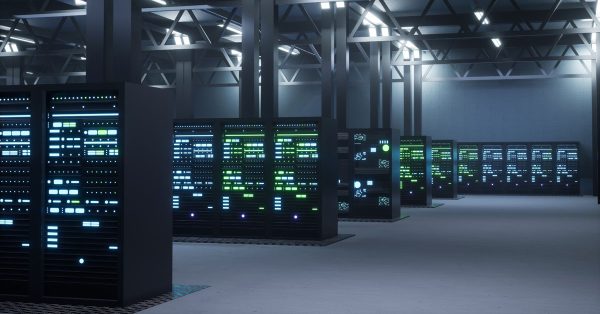
Malaysia, positioned as a Tier 2 country, could experience both opportunities and challenges. That said, its aim to be a regional data hub will largely remain unaffected, bolstered by partnerships with global technology leaders. While its semiconductor and AI sectors may face limitations on GPU access, the country is strategically positioned to benefit from the expansion of AI data centres by global technology giants like Microsoft, Google and Amazon, who are exempt from computing power limits and permitted to establish AI data centres in Tier 2 countries without restrictions.

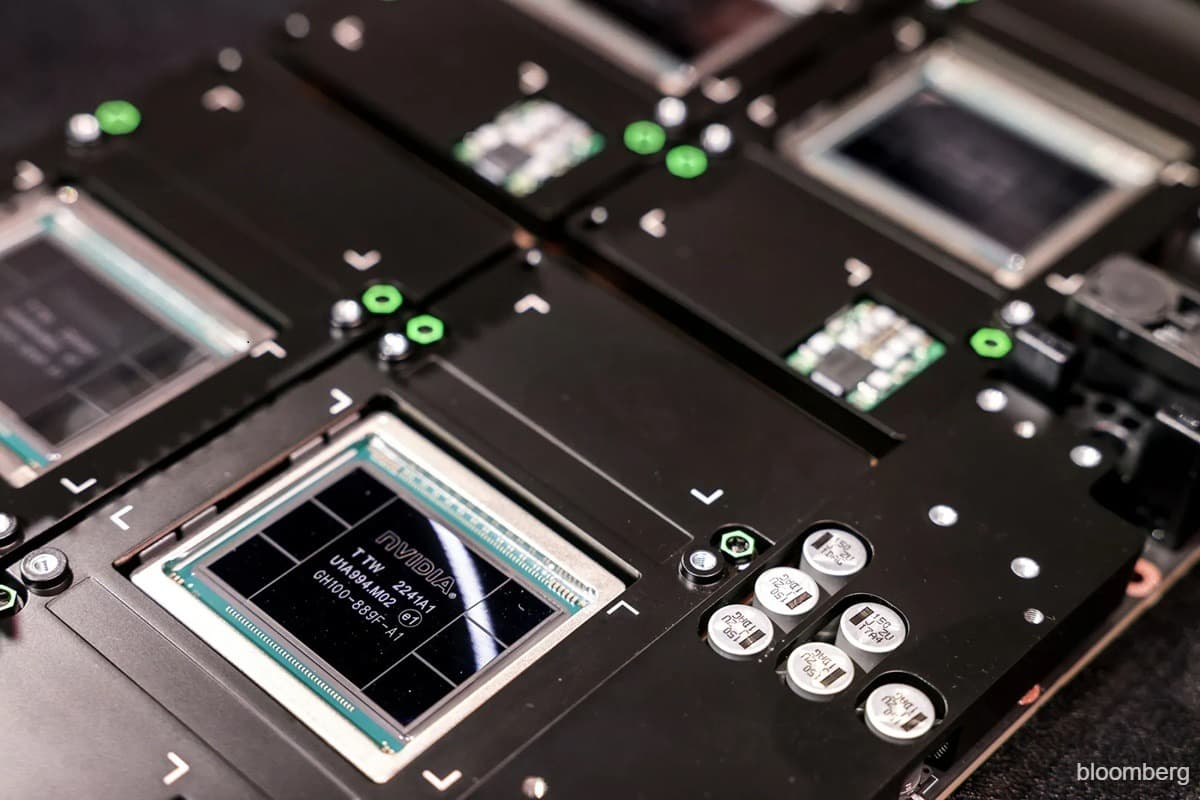
US imposes AI export curbs
Image: Bloomberg

However, industry reactions to the new policy are mixed. Malaysian Semiconductor Industry Association (MSIA) President Wong Siew Hai criticised the directive for creating confusion, citing conflicting compliance requirements for GPU purchases. In response to the proposed restrictions, the Ministry of Science, Technology, and Innovation (Mosti) announced plans to collaborate with the Ministry of Investment, Trade, and Industry (Miti) to prepare for potential impacts.

Meanwhile, Malaysian firms such as YTL Power remain optimistic. YTL, partnering with NVIDIA to deploy cutting-edge AI data centres in Asia, asserted that its operations remain unaffected due to exemptions granted to US hyperscalers.

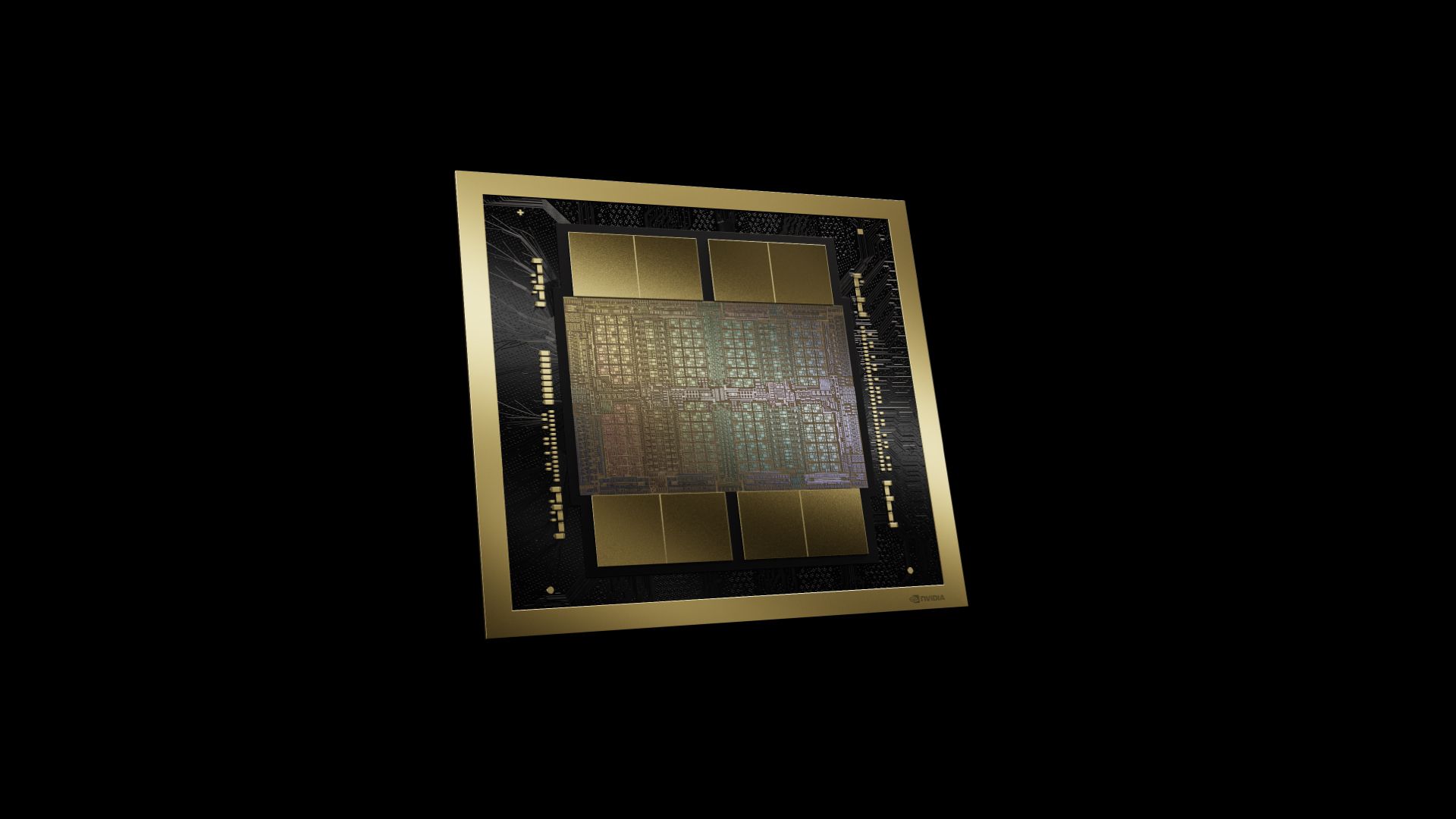
NVIDIA Blackwell AI
NVIDIA Blackwell AI Chip (Image: NVIDIA)

In contrast, the Semiconductor Industry Association (SIA) and NVIDIA expressed concerns over the broader implications of the export curbs. SIA President John Neuffer warned that the policy might harm US competitiveness, stifle innovation, and cede strategic markets to global rivals. NVIDIA’s Ned Finkle echoed these sentiments, cautioning that the “AI Diffusion” rule could derail economic growth and undermine the US’ technological leadership.

(Source: Reuters / Bloomberg [1] [2] / The Edge [1] [2] [3] [4])


fraudsters-now-use-voice-cloning-from-ai-technology

whatsapp sharing button
telegram sharing button
facebook sharing button
twitter sharing button
linkedin sharing button

USA: The Biden administration has unveiled a bold new directive aimed at preserving the United States’ dominance in artificial intelligence (AI) technology by tightening restrictions on AI chip exports.

According to an article published by Lowyat, the move introduces a tiered system for classifying nations, each with distinct access to US semiconductor technology, to curb the spread of sensitive AI capabilities to geopolitical rivals.

Three-tiered system for AI chip access

Under the new framework, countries are classified into three categories based on their access to advanced AI chips.

Tier 1 nations, including close US allies like Japan and the UK, enjoy unrestricted access to AI chips, positioning them as key partners in advancing the technology.

Tier 2 nations, such as Malaysia and Singapore, will face restrictions, limiting their access to certain high-performance chips.

Meanwhile, Tier 3 nations, including China and Russia, are completely barred from receiving AI chips, a move aimed at preventing these countries from exploiting the technology for military or economic gains.

One of the key concerns driving these new restrictions is the possibility of Tier 3 nations bypassing export controls by using cloud computing services hosted in third-party regions.

To counter this, the administration has imposed a cap on the amount of computing power that US companies can deploy abroad, limiting operations to just 50% of their total computing capacity and imposing stringent controls on allocations to Tier 2 nations.

Malaysia’s strategic position – opportunities and challenges

For Malaysia, placed in Tier 2, the policy presents both opportunities and challenges.

While the country’s ambition to become a regional data hub remains intact, it faces potential limitations in its semiconductor and AI sectors due to restricted access to crucial AI chips.

Despite these hurdles, Malaysia stands to benefit from the continued growth of AI data centers in the region, with global tech giants like Microsoft, Google, and Amazon being exempt from the computing power restrictions.

These companies are allowed to build AI data centers in Malaysia without limitations, reinforcing the nation’s standing as a hub for AI infrastructure in Southeast Asia.

However, the policy has sparked a mixed reaction from industry stakeholders.

Wong Siew Hai, President of the Malaysian Semiconductor Industry Association (MSIA), has expressed concerns over the confusion created by the directive, particularly regarding compliance requirements for GPU purchases.

In response, Malaysia’s Ministry of Science, Technology, and Innovation (Mosti) has announced plans to work closely with the Ministry of Investment, Trade, and Industry (Miti) to prepare for the potential economic impact of the restrictions.

On the other hand, some Malaysian companies, such as YTL Power, remain optimistic.

The company, which is working with NVIDIA to deploy state-of-the-art AI data centers in Asia, believes its operations will remain unaffected due to exemptions granted to major US tech firms.

Innovation and US competitiveness at risk

While Malaysia navigates its position within the new export framework, global industry voices have raised alarms about the broader impact of the export restrictions.

The Semiconductor Industry Association (SIA) has cautioned that the policy could stifle innovation and erode US competitiveness in the global tech race.

SIA President John Neuffer warned that by limiting access to advanced AI chips, the US risks ceding critical markets to global competitors, undermining its leadership in the fast-evolving AI sector.

NVIDIA, a leading provider of AI chips, echoed these concerns.

Ned Finkle, NVIDIA’s Vice President of Global Public Policy, argued that the new export restrictions—especially the “AI Diffusion” rule—could derail economic growth and hinder the development of cutting-edge technologies, ultimately weakening the US position as the global leader in AI and semiconductor innovation.

As the US moves forward with these restrictions, the industry will continue to grapple with the delicate balance between national security concerns and the need to foster innovation and maintain a competitive edge in the global technology arena.


====================================================


Mosti, Miti discuss ways to address possible AI chip export restrictions
13 Jan 2025, 06:33 pm
main news image

KUALA LUMPUR (Jan 13): The Ministry of Science, Technology and Innovation (Mosti) is in discussions with the Ministry of Investment, Trade and Industry (Miti) and other ministries to prepare for any potential development following reports that the United States is considering further export restrictions on artificial intelligence (AI) chips.

Mosti Minister Chang Lih Kang acknowledged that the potential impact could be significant for Malaysia but clarified that the reports are still unconfirmed.

“If they really implement (export restrictions), of course there will be impact not only to Malaysia but also to the entire global community. It will definitely impact Malaysia, especially as we are looking at growing AI in a big way. So without those AI chips, I think we will have problems.

“But as of now, everything is still hearsay. We do not know what kind of category and what countries in what categories (are affected), but of course, we’ve heard that 85% of the countries are in Tier 2 (category), which is not the most permissive but also not the most restrictive,” he told the media after launching the Teater LogTech research laboratory and TalentBridge programme at the Faculty of Computer Science & Information Technology, Universiti Malaya, on Monday.

According to reports, under the new US restriction, companies can apply for blanket permission to ship chips to data centres in most parts of the world, provided that no more than a quarter of their total computing power is located outside of Tier 1 countries, and no more than seven per cent in any one Tier 2 country.

The outgoing administration of President Joe Biden is reportedly planning a new round of export controls on advanced chips used in data centres, targeting both countries and companies. Bloomberg, citing anonymous sources, first reported the potential move.


=================================================


YTL Power ‘confident’ not affected by potential US chip export curbs amid Nvidia partnership
13 Jan 2025, 08:46 pm
main news image

YTL Power International Bhd managing director Datuk Seri Yeoh Seok Hong reiterated that the group is the first non-US company selected in Asia to partner Nvidia Corp to deploy and manage a supercomputer driven by the GB200 Blackwell GPUs or graphic processing units in the region. (Photo by Zahid Izzani/The Edge)

KUALA LUMPUR (Jan 13): YTL Power International Bhd (KL:YTLPOWR), which is in the midst of setting up its own artificial intelligence (AI) data centres using the latest chips by US chip giant Nvidia Corp, does not expect to be impacted by the proposed US rules on advanced chip exports into countries like Malaysia.

Speaking to The Edge in response to a query on the impact of the potential export curbs, YTL Power managing director Datuk Seri Yeoh Seok Hong reiterated that the group is the first non-US company selected in Asia to partner Nvidia to deploy and manage a supercomputer driven by the GB200 Blackwell GPUs or graphic processing units in the region.

“We are confident that we will not be affected by the latest announcement on the limitation on the export of GPUs,” said Yeoh.

“We understand that American hyperscalers, which include Nvidia, are not subject to the limits. As the only non-US company selected by Nvidia in Asia to deploy its latest chips on its DGX Cloud AI platform, there should be no issue with our roll-out,” he said.

Yeoh also said the sanction will not affect YTL Power’s customer pipeline for its AI data centres.

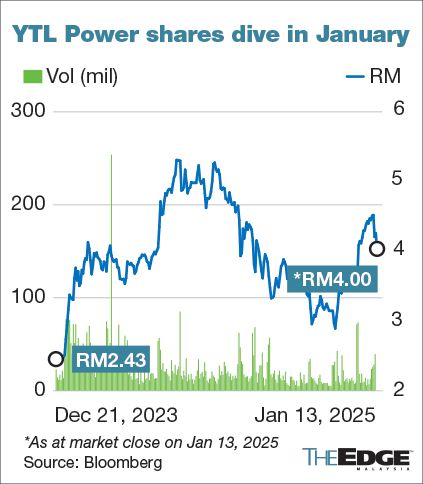
From their Jan 8 peak of RM4.51, shares of YTL Power have fallen as much as 11.3% to RM4 at Monday’s market close, dragged by concerns over the impact of the potential US chip export curbs on YTL Power's prospects of securing the latest, highly sought-after Nvidia chips made public since late 2023.

Shares of YTL Corp Bhd (KL:YTL), which owns a 48.43% direct stake in YTL Power, declined 14% over the same period.

YTL was mentioned by Nvidia, when the latter revealed the Blackwell chips in March 2024. In a statement, Nvidia said “sovereign AI clouds” such as YTL Power’s will provide Blackwell-based cloud services and infrastructure.

To be sure, under the alleged proposed regulation, firms headquartered in the US can apply for blanket US government permission to ship chips to data centres in most other parts of the world, based on certain volumes.

Separately, Nvidia DGX Cloud vice-president Alexis Black Bjorlin also named YTL Corp as one of five partners, alongside Amazon Web Services, Google Cloud, Microsoft Azure, and Oracle Cloud, which will “bring cutting-edge Nvidia technology to their clouds”.

The supercomputer combines 72 Blackwell GPUs and 36 Grace CPUs interconnected by the fifth-generation NVLink communications link to accelerate the development of AI models on DGX Cloud.

Analysts’ views on the prospects of proxies in the AI race have been mixed due to uncertainties raised from any cuts in chip supply.

A fund manager, when contacted, believes that the policy will be positive for YTL Power in view that “even less [parties] will get access to GB200 [GPUs] in its vicinity, while it has preferential treatment”.

Up in the air is whether companies like YTL Power plan to secure the validated end user (VEU) status — which requires adherence to US government security requirements — to secure higher limits for the GPUs, and bypass the nationwide volume limits that may be imposed on countries like Malaysia.

YTL Power first announced in December 2023 that it was going to collaborate with Nvidia to build an AI infrastructure that will be powered by the American chip firm’s technology. The collaboration was announced when Nvidia founder and chief executive officer Jensen Huang made his maiden visit to Malaysia.

Aside from YTL Power, companies like Amazon, Google, Microsoft, and Oracle — the same list of five Nvidia partners mentioned by Bjorlin — are also setting up data centres in Malaysia. 

Analysts covering YTL Power, which has set aside 100MW of its 500MW Kulai data centre capacity for AI infrastructure, have previously said that the first 20MW of the AI portion could begin operating from mid-2025 if the chipsets arrive on time.

At RM4, YTL Power is trading at a trailing price-earnings ratio (PER) of 10.7 times and a forward PER of 10.9 times, compared with forward PERs of peers such as Tenaga Nasional Bhd (KL:TENAGA) at 19.8 times, Malakoff Corp Bhd (KL:MALAKOF) at 14.4 times, and Mega First Corp Bhd (KL:MFCB) at 9.7 times.

There are currently 13 ‘buy’ calls and one ‘neutral’ rating among 14 research houses covering the power, water and telco firm, with target prices ranging from RM3.30 to RM7, and an average TP of RM5.31. At RM4, the group has a market capitalisation of RM32.85 billion.


==================================================


US semiconductor association and Nvidia slam Biden administration’s new export controls on AI chips
13 Jan 2025, 10:09 pm
main news image

KUALA LUMPUR (Jan 13): US-based Semiconductor Industry Association (SIA) and Nvidia Corp, two prominent voices in the global chip industry, have criticised the US government’s new export curbs on artificial intelligence (AI) chips.

The outgoing Joe Biden administration’s sweeping restrictions on advanced semiconductors and AI technology, billed as a national security measure, have drawn sharp criticism for potentially stifling innovation, harming economic growth, and eroding the US’s competitive edge in AI.

In a statement on Monday, the SIA president and CEO John Neuffer highlighted that the Biden administration’s decision to publish an interim final rule titled, “Export control framework for artificial intelligence diffusion”, would impose global restrictions and onerous licensing requirements on US exports of advanced integrated circuits (ICs).

This comes at a time when several regulations have already been implemented in recent years to control and restrict access to advanced semiconductors.

“We’re deeply disappointed that a policy shift of this magnitude and impact is being rushed out the door days before a presidential transition and without any meaningful input from industry. The new rule risks causing unintended and lasting damage to America’s economy and global competitiveness in semiconductors and AI by ceding strategic markets to our competitors.

The stakes are high, and the timing is fraught. We stand ready to work with leaders in Washington to chart a path forward that protects national security while allowing us to do what America does best — compete and win globally,” said Neuffer.

SIA members account for 99% of all US semiconductor industry sales, amounting to US$264 billion in 2023. Its charter members include Nvidia, Advanced Micro Devices Inc (AMD), Intel Corp, Broadcom Inc, Qualcomm Inc, Micron Technology Inc and Texas Instruments Inc.

Meanwhile, Nvidia is one of the most valuable companies in the world with a market capitalisation of US$3.26 trillion. The AI chip giant is specialising in accelerating computing and graphics processing unit (GPU).

Ned Finkle, the vice president of government affairs at Nvidia, pointed out that for decades, leadership in computing and software ecosystems has been “a cornerstone of American strength and influence worldwide”.

Therefore, the US federal government has wisely refrained from dictating the design, marketing and sale of mainstream computers and software — key drivers of innovation and economic growth.

“The first Trump Administration laid the foundation for America’s current strength and success in AI, fostering an environment where US industry could compete and win on merit without compromising national security.

“As a result, mainstream AI has become an integral part of every new application, driving economic growth, promoting US interests and ensuring American leadership in cutting-edge technology,” he said.

Finkle further said that today, companies, startups and universities around the world are tapping mainstream AI to advance healthcare, agriculture, manufacturing, education and countless other fields, driving economic growth and unlocking the potential of nations.

“Built on American technology, the adoption of AI around the world fuels growth and opportunity for industries at home and abroad.

“That global progress is now in jeopardy. The Biden administration now seeks to restrict access to mainstream computing applications with its unprecedented and misguided “AI Diffusion” rule, which threatens to derail innovation and economic growth worldwide,” he stressed.

Finkle said the Biden administration, in its last days in office, seeks to undermine America’s leadership with over 200 pages “regulatory morass”, “drafted in secret” and “without proper legislative review”.

According to him, this sweeping overreach would impose bureaucratic control over how America’s leading semiconductors, computers, systems and even software are designed and marketed globally.

“And by attempting to rig market outcomes and stifle competition — the lifeblood of innovation — the Biden administration’s new rule threatens to squander America’s hard-won technological advantage.

While cloaked in the guise of an “anti-China” measure, these rules would do nothing to enhance US security,” he warned.

Rather than mitigate any threat, Finkle opined that the new Biden rules would only weaken America’s global competitiveness, undermining the innovation that has kept the US ahead.

“Although the rule is not enforceable for 120 days, it is already undercutting US interests. As the First Trump Administration demonstrated, America wins through innovation, competition and by sharing our technologies with the world — not by retreating behind a wall of government overreach.

We look forward to a return to policies that strengthen American leadership, bolster our economy and preserve our competitive edge in AI and beyond,” he concluded.


========================================================


How will restricted AI chip access impact Malaysia?
13 Jan 2025, 06:18 pm
main news image

KUALA LUMPUR (Jan 13): The Joe Biden administration's plans to introduce new export restrictions on artificial intelligence (AI) chips under a three-tiered system by country have sparked concerns in Malaysia.

According to news reports, Malaysia has been classified as a Tier 2 country, permitted to import only 50,000 graphics processing units (GPUs) over two years, with data centre operators restricted to deploying a maximum of 7% of their computing capacity in any single Tier 2 nation.

Malaysia Semiconductor Industry Association (MSIA) president Datuk Seri Wong Siew Hai told The Edge that the industry is grappling with understanding the directives from such a “blanket” statement.

“First of all, I think it is a very important thing that we must comply with the US requirements. But the purported [new] directives are causing a lot of confusion. It is like two requirements that are not jiving, one statement is based on one assumption, and the other is based on another assumption,” Wong said.

Wong explained that the current compliance requires buyers of GPUs to get approval from vendors like Nvidia Corp. But the new purported tiering system makes interpretation difficult.

Commenting on the AI chips tiering news, Kenanga Investment Bank head of research Peter Kong said the new development may induce companies to come under US security standards to become validated end users (VEUs), which would then not be limited by the chip country quota.

“It does imply that there are higher guardrails being put up for the end-owners of these chips themselves, but this should not preclude assemblers of AI-chip powered servers from being able to conduct business,” Kong said.

Currently, there is no confirmation that the US will implement this, even though Bloomberg reported it would be announced by last Friday (Jan 10), Kong added.

Rollout of data centres to remain unaffected

Meanwhile, industry players believe the rollout of data centre (DC) projects will largely remain intact.

MSIA’s Wong explained that DCs have already obtained approvals from GPU vendors to secure GPUs. “As of now, data that is presented suggests that business is as usual for the industry, unless they receive new instructions from the US government.”

When contacted, YTL Power International Bhd (KL:YTLPOWR) managing director Datuk Seri Yeoh Seok Hong remained confident that the group will not be affected by the latest announcements on the limitation on the export of GPUs.

“We understand that American hyperscalers, which include Nvidia, are not subject to the limits. As the only non-US company selected by Nvidia in Asia to deploy Nvidia’s latest chips on Nvidia’s DGX Cloud AI platform, there should be no issue with our roll out,” he told The Edge.

Nevertheless, YTL Power saw its stock price drop by 25 sen or 5.9% to close at RM4 on Monday, giving it a market capitalisation of RM33.07 billion.

Tradeview Capital chief investment officer Nixon Wong Gok Hey thinks DC projects will be unaffected in the near term. “Based on the guide of the 7% threshold, current DC projects which are mostly US-related are still below that threshold,” he explained.

Little impact on local semiconductor sector

Analysts believe the impact on the local semiconductor industry will be minimal. For one, Tradeview’s Wong said that while Malaysia might be under some restrictions, it will not be entirely cut off from accessing advanced AI chips.

“Our semiconductor sector is not too exposed to advanced AI chips, and our strength lies in legacy, matured tech as Malaysia is still a key player in outsourced semiconductor assembly and test (OSAT) and automatic test equipment (ATE) fields,” Wong explained.

The same view was shared by TA Securities senior analyst Tony Chan Mun Chun, who highlighted that the proposed new regulation will certainly disrupt the global supply chain, and he expects local equipment players may temporarily see some business slow down.

Tradeview’s Wong noted that companies leveraging Nvidia's chips for AI-driven research and development or manufacturing — such as in Internet of Things (IoT), automotive technology, or industrial automation — might face disruptions in sourcing cutting-edge technology.

“I believe that the extent of the impact depends on several factors but may be moderate and will hinge on how restrictive the Tier 2 classification becomes. Perhaps it might just slow down innovation in tech production,” he added.

Malaysia’s foreign investment appeal at risk

Economist Samirul Ariff Othman highlighted that the tiered approach may threaten Malaysia’s attractiveness to foreign investors, particularly US tech firms, who may view restricted chip access as a liability.

Samirul also believes that by categorising Malaysia in the second tier, the US has sent a signal of mistrust, potentially undermining its image as a reliable trade partner and tech hub.

“The spectre of a past Malaysian firm’s inclusion on the US Entity List serves as a stark reminder that export controls and compliance frameworks must be watertight,” he noted.

Meanwhile, MSIA’s Wong stated that all semiconductor manufacturers have been compliant with the US ruling on export controls for advanced chips.

“So far, there was only one violated case reported, but it was related to a distributor, not a manufacturer,” he noted. “The issue happened when the distributor sold it to a customer, then the customer sold it to another party. It’s quite hard to track after the next few layers. But at the first layer, we will definitely comply.”

As for Samirul, the path forward requires a delicate balancing act. Diplomatic engagement with the US to secure VEU status, coupled with robust internal governance to prevent technology misuse, will be crucial.

According to Science, Technology and Innovation Minister Chang Li Kang, Malaysia is bracing for the potential fallout from the US' proposed restrictions on chip exports. He cautioned that the measures, if enforced, would have far-reaching consequences, impacting not just Malaysia but the global technology ecosystem.

"If the restriction is implemented, it will impact Malaysia, especially as we are looking to grow AI in a big way. Without AI chips, we will have problems. But as of now, everything is still hearsay," Chang reportedly said.


======================================================

Biden unveils last round of AI chip curbs aimed at China, Russia

AI chip giant Nvidia has spoken out against the newest export curbs imposed by the Biden administration.
Washington/Hong KongCNN — 

The Biden administration has issued new restrictions on the export of US-developed computer chips that power artificial intelligence (AI) systems, in a final effort to prevent rivals like China from accessing the advanced technology, just a week before leaving office.

The fresh curbs, the culmination of years of attempts to block China from gaining ground in its military and industrial leadership efforts, are expected to further inflame tensions between Washington and Beijing ahead of the inauguration of President-elect Donald Trump next week. They’ve also triggered intense criticism from US tech giants like Nvidia and Oracle.

Speaking to reporters on Sunday, US Secretary of Commerce Gina Raimondo said the new rules were “designed to safeguard the most advanced AI technology and ensure that it stays out of the hands of our foreign adversaries, but also enabling the broad diffusion and sharing of the benefits with partner countries.”

The global export framework, announced Monday, creates three tiers of countries for exports of advanced AI chips and technology. There are no new restrictions for partners and allies like Australia, Japan, South Korea and Taiwan.

A second tier of countries including China and Russia, which are already blocked from buying advanced chips, will be newly subject to restrictions on the sale of the most powerful “closed” AI models, which refer to models whose underlying architectures are not released to the public.

The biggest changes will be faced by the third group, which comprises most of the world, which will soon have new caps on the amount of computing power that can be bought, although they will be able to apply for additional quotas subject to certain security requirements. Analysts have said this change is intended to prevent China from accessing AI chips through third countries, particularly in the Middle East.

The restrictions are being announced against a global backdrop of soaring demand for AI chips made by the likes of Nvidia, AMD and Intel. With days to go before Biden leaves office, the rules now enter a 120-day comment period but will take effect before that period is over.

“We hope that the next administration takes full advantage of those 120 days to listen to experts, industry, industry players, partner countries,” Raimondo said. “I fully expect the next administration may make changes as a result of that input.”

Senior Biden administration officials, speaking on background, were asked Sunday about the extent to which they consulted with the incoming Trump administration. Officials would only acknowledge there were “ongoing discussions about a range of issues.”

“We believe we’re in a critical window right now, particularly vis-a-vis China,” one official said. “Every minute counts from our perspective.”

The latest measures were announced just a month after the outgoing administration announced curbs on the sale of two dozen types of semiconductor-making equipment and restrictions on numerous Chinese companies from accessing American technology.

Since October 2022, the administration has announced several rounds of semiconductor export restrictions targeting Beijing. Chinese leader Xi Jinping has made self-sufficiency a major pillar of his economic strategy to make China a tech superpower.

‘In jeopardy’

Tech giants Nvidia, the world’s largest provider of processors that power AI, and Oracle as well as an influential semiconductor industry group blasted the newest restrictions, accusing the Biden administration of bureaucratic overreach and saying they would harm US competitiveness.

In a blog post published on Monday, Ned Finkle, Nvidia’s vice president of government affairs, wrote the adoption of AI around the world fuels growth and opportunity for industries at home and abroad.

“That global progress is now in jeopardy. The Biden Administration now seeks to restrict access to mainstream computing applications with its unprecedented and misguided ‘AI Diffusion’ rule which threatens to derail innovation and economic growth worldwide,” he wrote.

“While cloaked in the guise of an ‘anti-China’ measure, these rules would do nothing to enhance US security,” he added.

Oracle Executive Vice President Ken Glueck wrote last week the rule “does more to achieve extreme regulatory overreach than protect US interests and those of our partners and allies.”

“It practically enshrines the law of intended consequences and will cost the US critical technology leadership,” he said.

Last week, the Washington-based Semiconductor Industry Association said it was “deeply concerned by the unprecedented scope and complexity of this potential regulation, which was developed without industry input and could significantly undercut US leadership and competitiveness in semiconductor technology and advanced AI systems.”